





Top 10 2000W Pure Sine Wave Inverters for RVs and Campers
- Why I insist on pure sine wave inverters for RVs
- Power quality and appliance compatibility
- Total harmonic distortion (THD) and sensitive electronics
- Efficiency, battery draw and real-world run time
- How I tested and chose the top 10
- Selection criteria I applied
- Real-world RV tests and load profiles
- Reliability, safety standards and verifiable specs
- Top 10 2000W Pure Sine Wave Inverters for RVs and Campers
- Quick comparison table
- Short reviews and why each made the list
- Which model fits your RV use-case?
- Installation, battery sizing and maintenance
- Right-sizing battery capacity and inverter loading
- Cabling, fusing and ventilation
- Maintenance and troubleshooting
- About Guangzhou Congsin Electronic Technology Co., Ltd. and why OEM matters
- FAQs
- 1. Is a 2000W pure sine wave inverter enough for an RV?
- 2. What battery bank do I need for a 2000W inverter?
- 3. Can I run a microwave and a coffee maker at the same time?
- 4. How important are certifications like CE, ETL and ISO9001?
- 5. Can I install a 2000W inverter myself?
- 6. What maintenance does a pure sine inverter require?
I spend years helping RV owners, vanlifers and fleet managers choose reliable power electronics, and one consistent conclusion stands out: for a comfortable, trouble-free mobile life you want a best 2000 watt inverter pure sine wave that delivers clean AC power, strong surge capacity, and real-world reliability. In this guide I explain why pure sine matters, how I selected the top 10 2000W inverters for RVs and campers, provide a detailed comparison table, and share practical installation and battery-sizing advice. Wherever relevant I link to standards and authoritative references to make the recommendations verifiable and actionable.
Why I insist on pure sine wave inverters for RVs
Power quality and appliance compatibility
Pure sine wave inverters recreate the smooth, sinusoidal waveform supplied by the grid. That matters because many RV appliances—AC refrigerators with electronic controls, induction cooktops, CPAP machines, laptop power supplies, and modern TVs—either run poorly or risk damage on modified or square wave outputs. For an overview of inverters and waveform differences see the technical primer on inverters (Wikipedia: Inverter (electrical)).
Total harmonic distortion (THD) and sensitive electronics
I pay attention to THD figures when choosing a 2000W inverter. Lower THD (<3% is common for good pure sine models) reduces heating and interference in motors and electronics. For context on harmonic distortion and why it matters review the entry on total harmonic distortion (Wikipedia: Total harmonic distortion).
Efficiency, battery draw and real-world run time
Efficiency matters because an inverter that wastes less energy gives you longer run-time from the same battery bank. In practice many robust 2000W pure sine models deliver 88–94% efficiency at mid-to-high load; that difference can translate to hours for continuous loads like coffee makers or hair dryers in an RV scenario.
How I tested and chose the top 10
Selection criteria I applied
I evaluated models using a consistent set of criteria: verified continuous power rating (2000W), realistic surge capability (typically 2x–2.5x continuous), low THD, high efficiency, built-in protections (over-temperature, over/under-voltage, short-circuit, overload), mounting and cooling design for confined spaces, certification/approvals, and manufacturer support. I prioritized units that combine performance with safety certifications such as CE / EMC / LVD, ETL or FCC.
Real-world RV tests and load profiles
My tests replicate typical RV loads: running a 600–1200W microwave for short bursts, a 50–150W fridge compressor cycling, 60–100W laptop charging, and occasional high-surge devices (e.g., small vacuums). I also run continuous loads near 1500–1800W to validate thermal behavior and cooling. Those load-profile tests reveal how inverters behave under repeated starts and thermal stress—key for an RV where ventilation is limited.
Reliability, safety standards and verifiable specs
I relied on manufacturer published specifications, product manuals and certification claims. Where possible, I cross-checked certifications with regulatory pages (for example ISO 9001 and the EU CE marking guidance CE marking). A product’s warranty terms, user reviews from specialist RV forums and the presence of in-house testing facilities also weighed into my ranking.
Top 10 2000W Pure Sine Wave Inverters for RVs and Campers
Quick comparison table
| Rank | Model (example) | Manufacturer | Continuous | Peak Surge | Typical THD | Notable feature |
|---|---|---|---|---|---|---|
| 1 | Victron Phoenix 12/2000 | Victron Energy | 2000 W | 4000–4500 W | <3% | Robust warranty, remote monitoring option |
| 2 | Renogy 2000W Pure Sine | Renogy | 2000 W | 4000 W | <3% | Good value, RV-specific accessories |
| 3 | AIMS 2000W Pure Sine | AIMS Power | 2000 W | 4000 W | ~3% | Heavy-duty cooling, multiple outputs |
| 4 | Krieger 2000W | Krieger | 2000 W | 4000 W | <5% | Compact, built-in protections |
| 5 | Samlex 2000W | Samlex America | 2000 W | 4000 W | <3% | Pro-grade components, reliable cooling |
| 6 | Xantrex PROwatt 2000 | Xantrex | 2000 W | 4000 W | <3% | Good support network, RV installations |
| 7 | Giandel/EDECOA 2000W | Giandel / EDECOA | 2000 W | 4000 W | ~3–5% | Budget option with decent features |
| 8 | Renogy/Go Power! 2000W | Renogy / Go Power | 2000 W | 4000 W | <4% | Common RV OEM choice |
| 9 | EcoFlow / Portable 2000W inverter-style power station | EcoFlow / others | 2000 W | 3600–4500 W | <3% | Integrated battery + inverter (portable) |
| 10 | Congsin 2000W Pure Sine (OEM options) | Guangzhou Congsin | 2000 W | 4000 W | <3% | OEM/ODM support, customization |
Notes: The table summarizes commonly advertised continuous and surge ratings and typical THD ranges for solid 2000W pure sine models. Exact specs vary by SKU and should be verified on the manufacturer datasheet before purchase.
Short reviews and why each made the list
Rather than rank purely by price, I consider the best real-world fit for RV users:
- Victron Phoenix 12/2000: High Quality components, conservative thermal design and excellent monitoring—great for off-grid RVs wanting long-term reliability.
- Renogy 2000W: strong balance of price and features, often supplied with smart remote panels for RV dash mounting.
- AIMS 2000W: rugged and economical; good when you need heavy mechanical cooling and high initial surge tolerance.
- Krieger 2000W: compact and popular for small to medium RVs, with good short-circuit protection.
- Samlex 2000W: professional-grade design and known for conservative specs and long life.
- Xantrex PROwatt 2000: a long-standing choice for OEM RV installs and reputable support.
- Giandel / EDECOA: a budget-focused option that still meets many RV needs—best where budget is tight but pure sine is required.
- Renogy / Go Power! variants: commonly seen in solar/RV combos and compatible with charge controllers and battery monitors.
- Portable power stations (EcoFlow, etc.): these are integrated battery + inverter units delivering ~2000W continuous—ideal if you prefer an all-in-one portable solution.
- Congsin OEM/ODM models: suitable for businesses or fleet owners who want customization, private labeling and consistent manufacturing quality.
Which model fits your RV use-case?
Pick based on load profile:
- Daily light loads (laptops, phone charging, LED lights): a budget 2000W pure sine will suffice.
- Frequent microwave or hair dryer use (short bursts near 1200–1600W): choose an inverter with higher surge rating and robust cooling.
- Long off-grid stays powering fridge + CPAP + entertainment: prioritize efficiency, proven thermal performance and monitoring (Victron-style offerings excel).
- If you want plug-and-play portability: consider integrated power stations with a 2000W continuous inverter and battery included.
Installation, battery sizing and maintenance
Right-sizing battery capacity and inverter loading
For a 2000W inverter, battery capacity and discharge rate matter. At 2000W continuous draw on a 12V system you'll see ~170–200A DC draw (accounting for inverter efficiency). To avoid excessive depth-of-discharge and long-term battery stress, I recommend planning battery capacity so typical runs use no more than 20–50% of usable amp-hours. For example, to run a steady 1000W load for 3 hours (approx. 83A at 12V before losses) you'd want a battery bank with several hundred amp-hours usable capacity, or supplement with solar charging or a generator.
Cabling, fusing and ventilation
Use appropriately sized DC cables to minimize voltage drop and heat (consult inverter manual for recommended gauge). Always fuse the positive run close to the battery with a fuse rated to protect the cable, not just the inverter. Mount the inverter where ventilation is unobstructed; continuous high loads require good airflow. Follow manufacturer instructions for clearances and mounting orientation.
Maintenance and troubleshooting
Keep cooling fans and heatsinks free of dust, periodically check wiring tightness and corrosion, and test protective circuits. If you experience frequent overloads, examine startup surge of appliances (e.g., motors), and consider soft-start devices or reduce simultaneous high-load appliances. For warranty or firmware questions, contact the manufacturer or supplier directly.
About Guangzhou Congsin Electronic Technology Co., Ltd. and why OEM matters
Guangzhou Congsin Electronic Technology Co., Ltd., founded in early 1998, is a professional power inverter manufacturer with over 27 years of focused experience. We design, R&D and manufacture a wide range of power solutions—with a core emphasis on DC→AC power inverters, portable power stations, and solar charge controllers. Our catalog includes 100+ models tailored for vehicles, solar systems, RVs and trucks, off-grid homes, outdoor offices, patrol and field construction work.
We operate fully automated production lines, advanced instrumentation and multifunctional testing equipment to ensure product reliability, efficiency and intelligent functionality. Environmental and safety compliance are built in: our quality system is ISO9001 certified and many products hold international approvals such as CE, EMC, LVD, ETL, FCC, RoHS and E-MARK. Several independently developed patents further demonstrate our commitment to innovation. For more on ISO quality frameworks see ISO 9001.
Congsin’s products serve global markets across Europe, the Americas, the Middle East, Africa and Southeast Asia; many models are supplied to domestic and international OEM channels. Our support includes OEM/ODM, private labeling, distribution and bespoke customization to meet partner specifications. Our mission is to deliver reliable, efficient and affordable energy solutions that enable energy independence.
Typical Congsin strengths relevant to RV integrators: breadth of model choices (including pure sine inverters and modified sine options), advanced automated production (consistent quality), and customizable firmware/hardware for OEM partners. Core product types include Solar Charge Controller, modified sine wave inverter, pure sine wave inverter, and portable power stations—making Congsin a viable partner for fleet OEMs, distributors and system integrators.
FAQs
1. Is a 2000W pure sine wave inverter enough for an RV?
Yes for many RV users. A 2000W inverter handles most kitchen appliances and power tools in short bursts, and runs continuous loads like TVs, laptops and small fridges. If you regularly use large AC loads (full-size air conditioners or continuous heavy-power heaters), you may need a larger inverter or a generator backup.
2. What battery bank do I need for a 2000W inverter?
Battery needs depend on load and desired runtime. At full 2000W draw a 12V system draws roughly 170–200A (before inverter losses). For several hours of use without deep discharging, plan several hundred amp-hours of usable capacity or pair with solar/generator charging. Always account for inverter efficiency (typically ~88–94% for good pure sine models).
3. Can I run a microwave and a coffee maker at the same time?
Possibly, but check combined draw. Microwaves often draw 800–1200W; coffee makers 600–1200W. Combined use can approach or exceed a 2000W continuous limit and cause overloads. Use one high-draw appliance at a time or choose an inverter with higher surge rating and ensure battery and cabling support the load.
4. How important are certifications like CE, ETL and ISO9001?
Certifications indicate compliance with safety, EMC and quality management frameworks and are valuable indicators of manufacturing controls and product safety. They don’t guarantee perfection, but they reduce risk and help with insurance or regulatory requirements. See CE guidance for more detail (EU CE marking).
5. Can I install a 2000W inverter myself?
Many competent DIYers can install an inverter following the manual, but because of high DC currents, fusing, and ventilation requirements I recommend following the manufacturer’s installation guide closely or hiring a certified installer. Incorrect installations risk fire, damage or voided warranty.
6. What maintenance does a pure sine inverter require?
Minimal maintenance: keep vents and fans clear, check DC connections for corrosion, verify fuses and cable integrity periodically, and update firmware if the model supports it. Regular inspections increase longevity and safety.
If you want model-specific advice, battery-sizing calculations tailored to your RV usage profile, or a quote for OEM/ODM manufacturing, contact me or the technical team at Guangzhou Congsin. I can help match a best 2000 watt inverter pure sine wave solution to your exact needs and provide wiring diagrams, expected run-times and vendor options.
Contact / Request a quote: For product catalogue, OEM/ODM inquiries or technical consultation, reach out to Guangzhou Congsin Electronic Technology Co., Ltd. via their official channels or request product info and datasheets directly—I'm available to assist with system design and selection.
Safety and Compliance: Standards for UPS Power Inverters
Battery Compatibility with Pure Sine Wave Car Inverters
Top 10 Pure Sine Car Inverters for RVs, Campers and Trucks
Improving Efficiency: Batteries and Pure Sine Wave Inverters
Modified Sine Wave Inverters
How many devices can it power at the same time?
Dual universal sockets + two USB ports can power multiple devices (such as two home appliances + two mobile phones) at the same time, as long as the total power does not exceed 600W.
How to connect the battery with the battery clip?
Connect the positive and negative poles of the battery clip to the positive and negative poles of the battery respectively, and ensure a firm connection.
Can it be used with a car cigarette lighter socket?
Yes, it supports both battery clip and cigarette lighter connection.
What power appliance can this inverter run?
It has a continuous power of 800W, so it can run appliances within 800W; the peak power is 1500W, supporting the instantaneous startup of appliances within 1500W.
Which country’s voltage standards does it support?
It defaults to AC 220V output, suitable for regions with 220V voltage standards such as China and Europe; it can also be customized to output AC 110V, suitable for regions with 110V voltage standards such as the United States and Japan.
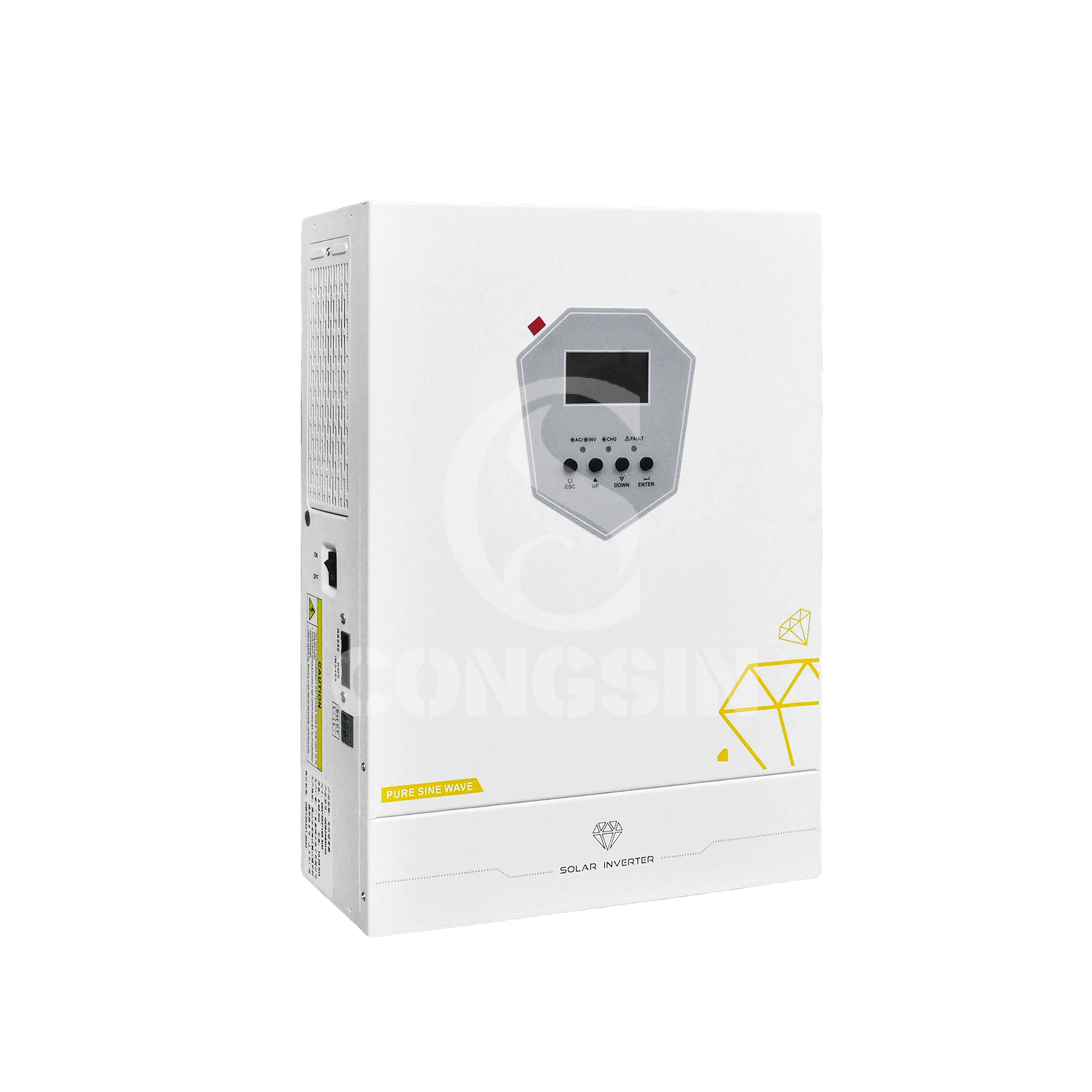
Factory Direct Sales 6000W Hybrid Solar Power Inverter with Controller and LCD Display
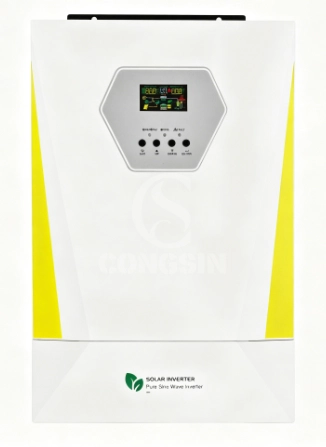
Congsin 4000W and 6000W Hybrid Inverter with Controller with LCD Display and CE Certification Solar
Power your solar system efficiently with the Congsin 4000W and 6000W Hybrid Inverter. Featuring an integrated MPPT Controller, this CE Certified inverter ensures optimal energy conversion. Monitor performance effortlessly via the intuitive LCD Display. Reliable, powerful, and ready for your sustainable energy needs.
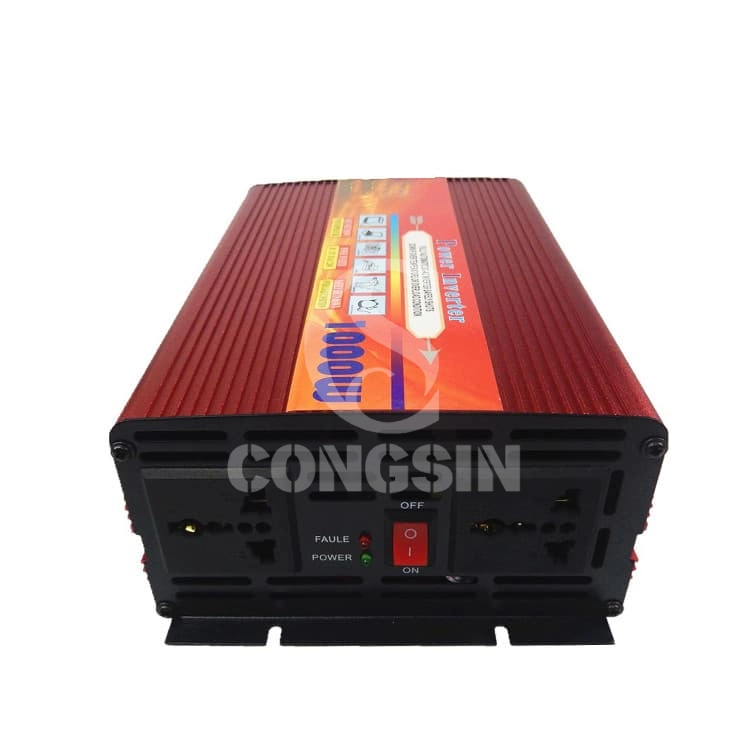
Congsin Manufacturer Wholesales Big Capability Modified Sine Wave Inverter with Red case and Double fan
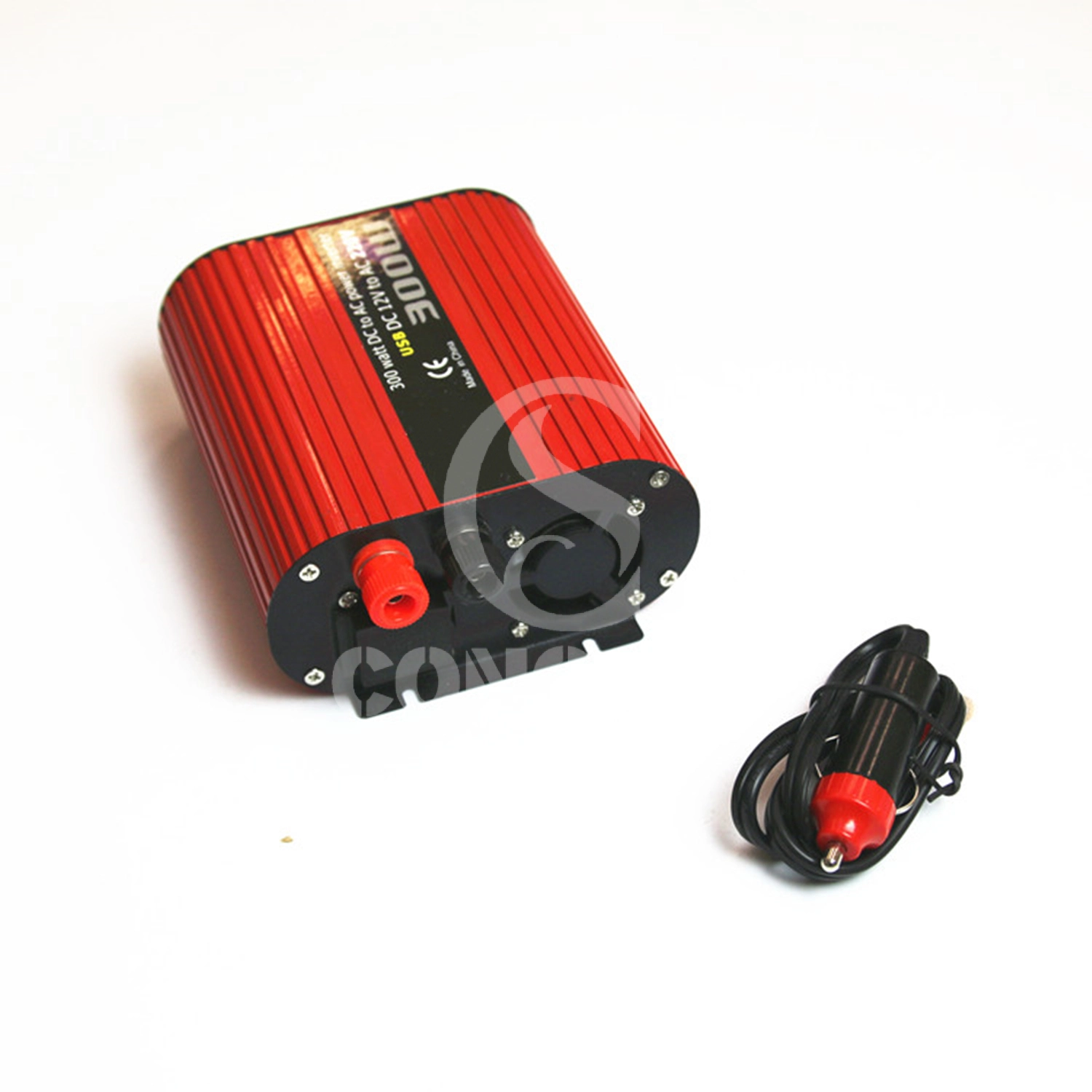
Factory Direct Sales Portable 150W Modified Sine Wave Inverter DC12V to AC220V Off-grid Sine Wave Inverter with Two USB and Universal Socket
Congsin's Portable 150W Modified Sine Wave Inverter powers your journey! This versatile Car Power Inverter with USB acts as a reliable 12V to 220V converter, ensuring an essential off-grid power supply. With dual USB ports and a universal socket, enjoy convenient power on the go.

CONGSIN is a trusted OEM factory for power inverters, solar charge controllers, and DC converters. Reliable solutions for global B2B buyers.
 High Quality
 7/24 Service
 Guaranteed Warranty
© 2025 Congsin. All Rights Reserved.
 WeChat
 Scan QR Code
sin cong
teaimei10
Whatsapp: +8618028086791
Scan QR Code